GUSS Automation (part of John Deere) leverages Ouster OS0 digital lidar for precision autonomy in high-value crops
Operating where a few feet off-center can cost tens of thousands of dollars, GUSS Automation is bringing driverless precision to the orchards and vineyards that grow agriculture's highest-value crops.
Company
GUSS Automation
Company Maxim
Bringing driverless precision to the orchards and vineyards that grow agriculture's highest-value crops.
https://gussag.com/
Location
Kingsburg, USA
Product Used
Industry
Industrial
The Critical Need for Precision Autonomy
Orchards and vineyards operate on razor-thin margins of error, and skilled operators are scarce. GUSS Automation, now part of John Deere, built the world's first autonomous orchard sprayer to bring driverless precision to agriculture's highest-value crops.
The Challenge: Precision and Safety Where GPS Falls Short
Orchards and vineyards are among the most valuable environments in agriculture, and the margin for error is measured in inches. Skilled operators are scarce, and the work is long and repetitive. Bringing autonomy to this work surfaced three hard constraints:
- No margin for error: A machine that drifts off-center by a few feet can cause tens of thousands of dollars in crop damage in a single pass. Precision is not just a performance metric here, it is strongly tied to business outcomes.
- GPS alone is not enough: GPS-based navigation is not accurate enough for high-value crops, and dense canopy blocks the signal outright. A driverless machine has to know exactly where it is in the row without relying on it.
- A punishing duty cycle: Any sensing solution had to see through dust, chemical spray, and darkness, and reliably tell a person or animal from a post or a low branch, with no operator on board to intervene.
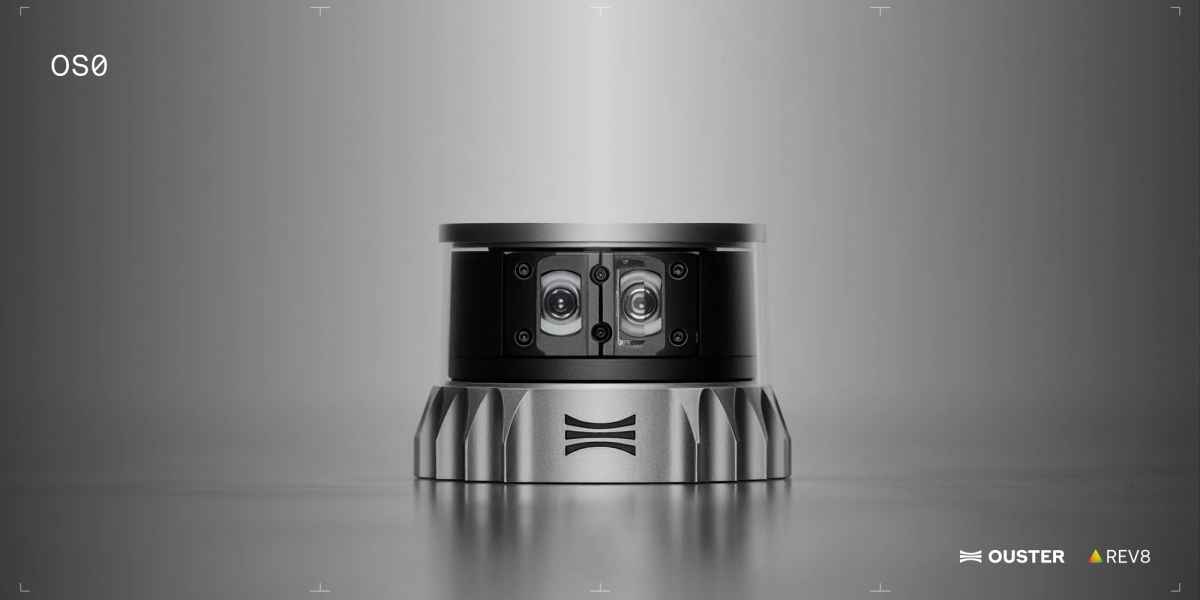
Ouster OS0 digital lidar, the ultra-wide field-of-view sensor equipped on GUSS Autonomous Sprayers
"At GUSS, we are focused on developing autonomous solutions that help growers address the unique challenges of high-value crop production. Integrating advanced sensing technologies into our machines helps support reliable operation in complex orchard environments and provides growers with tools designed to improve productivity and operational flexibility."
Jason BrantleyVice President, Production Systems, Small Ag & Turf, John Deere
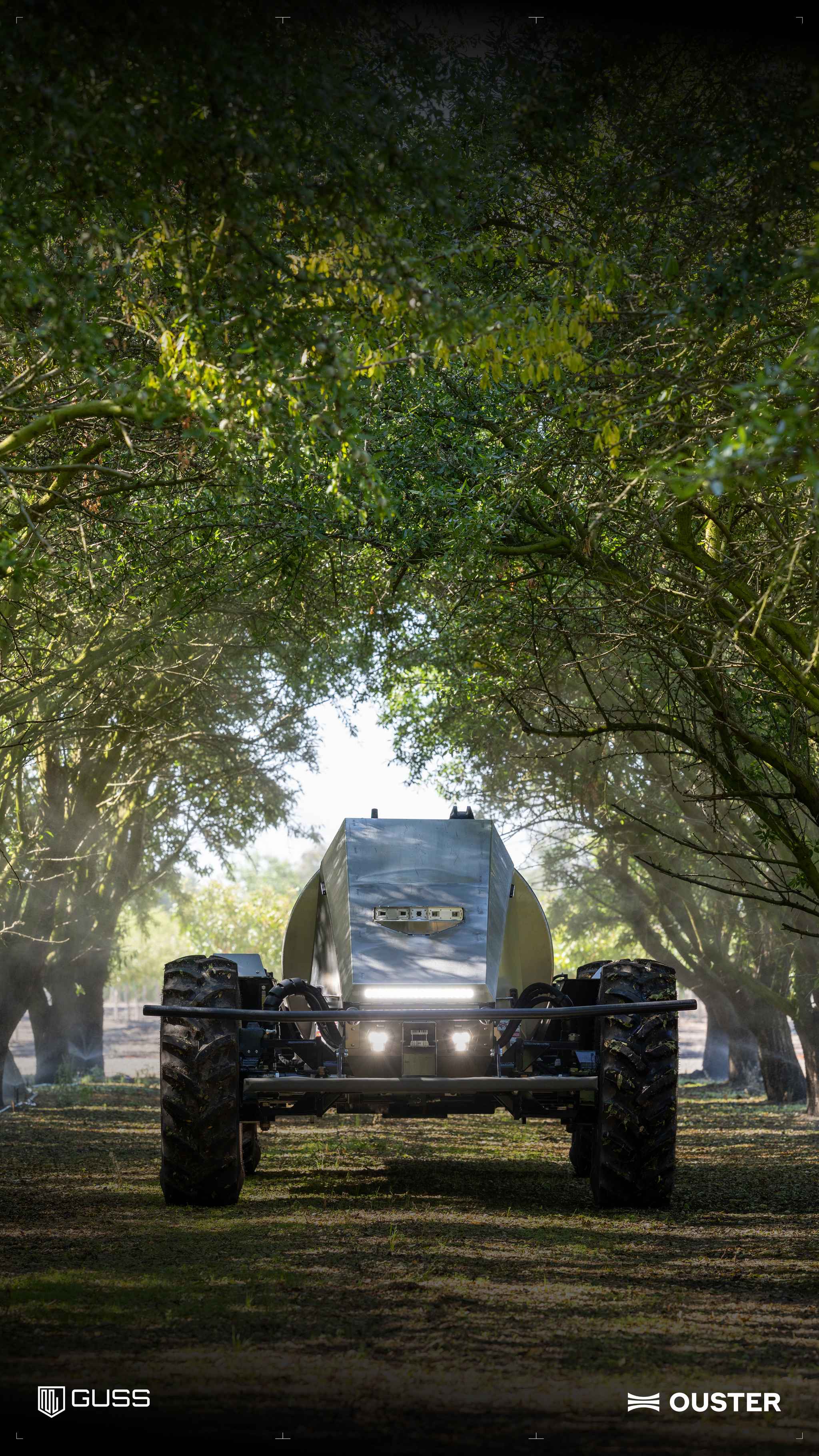
A GUSS Autonomous Sprayer, guided by Ouster OS0 lidar, navigating beneath dense orchard canopy where GPS signal is blocked
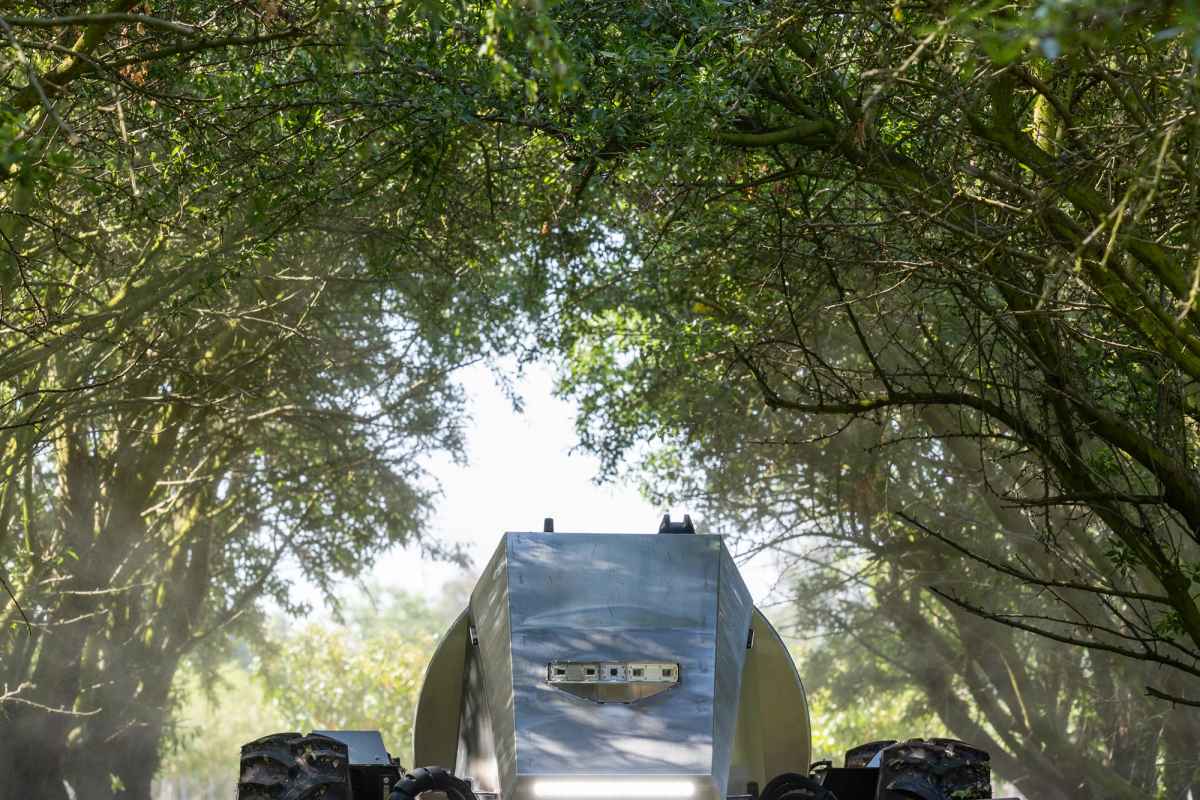
A GUSS Autonomous Sprayer, guided by Ouster OS0 lidar, navigating beneath dense orchard canopy where GPS signal is blocked
The Solution: Ultra-Wide 3D Sensing for Driverless Orchard Work
GUSS built the world's first autonomous orchard sprayer in Kingsburg, California, drawing on decades of commercial spraying experience. Now a John Deere company anchoring Deere's High-Value Crop autonomy portfolio, GUSS produces a family of driverless machines sold and supported through the John Deere dealer network: the air blast GUSS, the spot-spraying Herbicide GUSS, and the fully electric Electric GUSS.
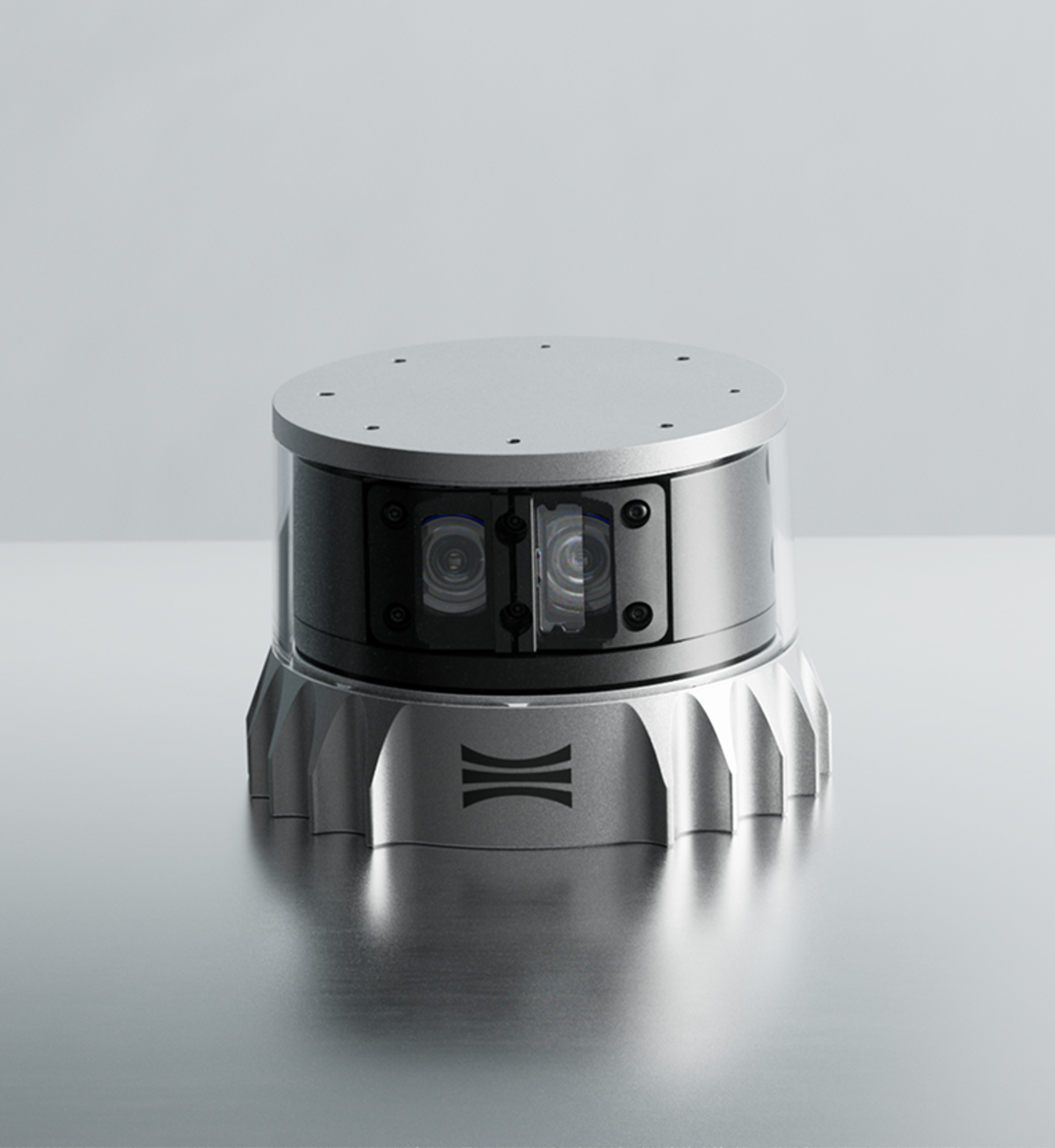
GUSS machines navigate using a combination of lidar, GPS, vehicle sensors, and GUSS's proprietary autonomy software, with no operator on board. On machines equipped with Ouster, the OS0 digital lidar provides the sensing layer. Its ultra-wide field of view sees trunks, crop rows, ground contours, and obstacles all around the machine rather than in a narrow forward cone, which is what allows a sprayer to hold its line between two rows of trees. With up to 128 channels of resolution and true 3D ranging that is independent of ambient light, the OS0 keeps the machine localized where the canopy blocks GPS, and keeps detection working through dust, chemical spray, and full darkness.
Ouster was selected after meeting John Deere's rigorous environmental requirements and quality standards.
Results: Eight Machines, One Operator, Every Row Protected
With reliable sensing on every machine, a single operator can monitor up to eight autonomous machines at once from a laptop, working multiple rows simultaneously. One skilled operator supervises a fleet rather than driving a single machine.
The precision that makes it possible also protects the asset. Dense, accurate 3D data keeps each machine centered in its row, avoiding the crop damage that a few feet of drift would cause. Because the OS0 does not depend on ambient light, the same machines run day or night, extending the working window during the narrow periods when spraying has to happen.
Spraying is the first application, not the last. The same lidar-powered autonomy platform opens the door to additional orchard and vineyard operations, and GUSS has announced plans to upgrade its Autonomous Orchard Machine fleet with Ouster's Rev8 OS0, the most rugged sensor generation Ouster has built, rated to IP68 and IP69K sealing, 10G vibration, and 100G shock, with a 10-year production life. For machines that work through dust, chemical spray, and long seasons, that durability is what makes fleet-scale deployment sustainable.
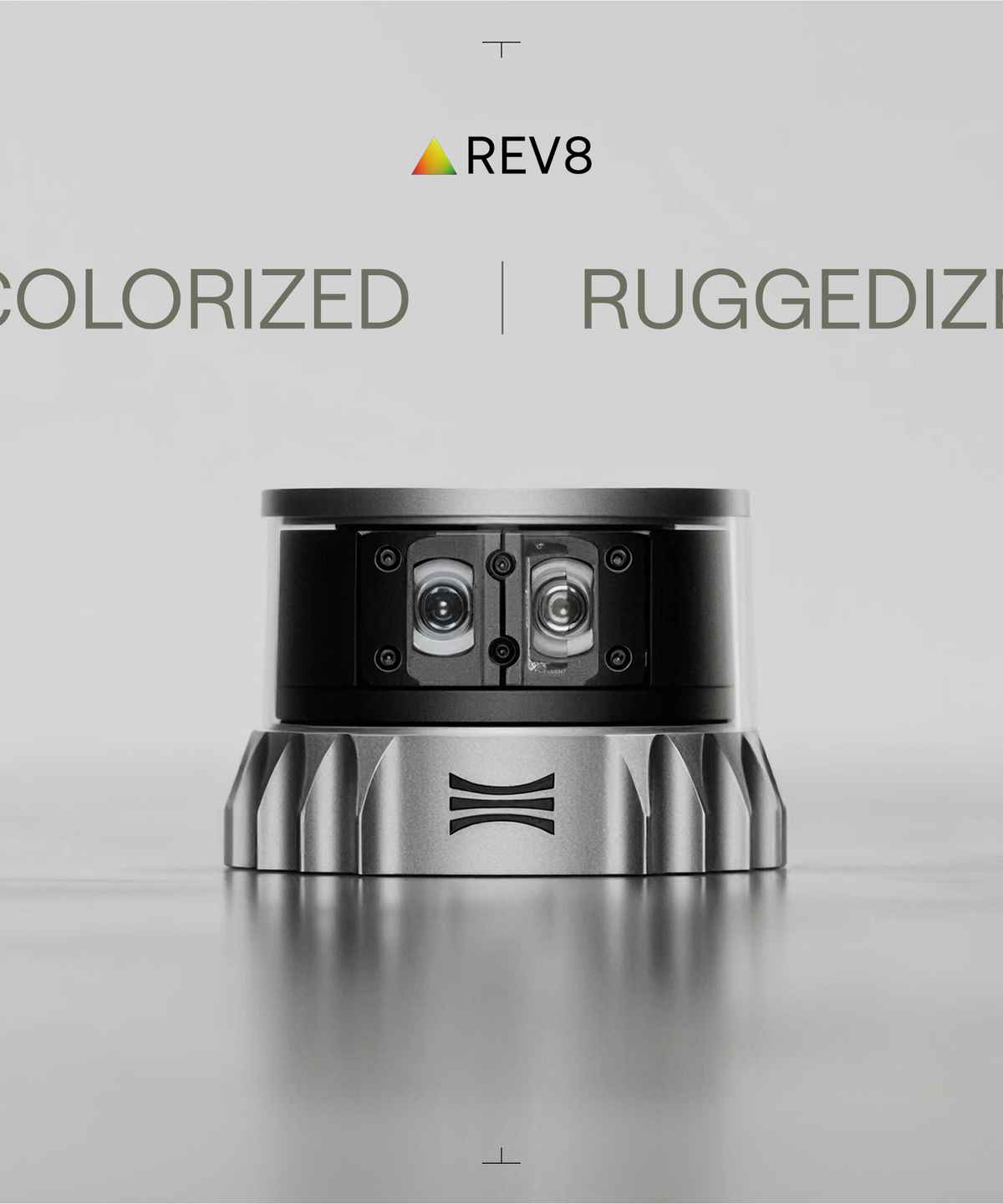
Ouster Rev8 OS0 — native color lidar rated to 100g shock and a 90° vertical field of view for autonomous orchard work
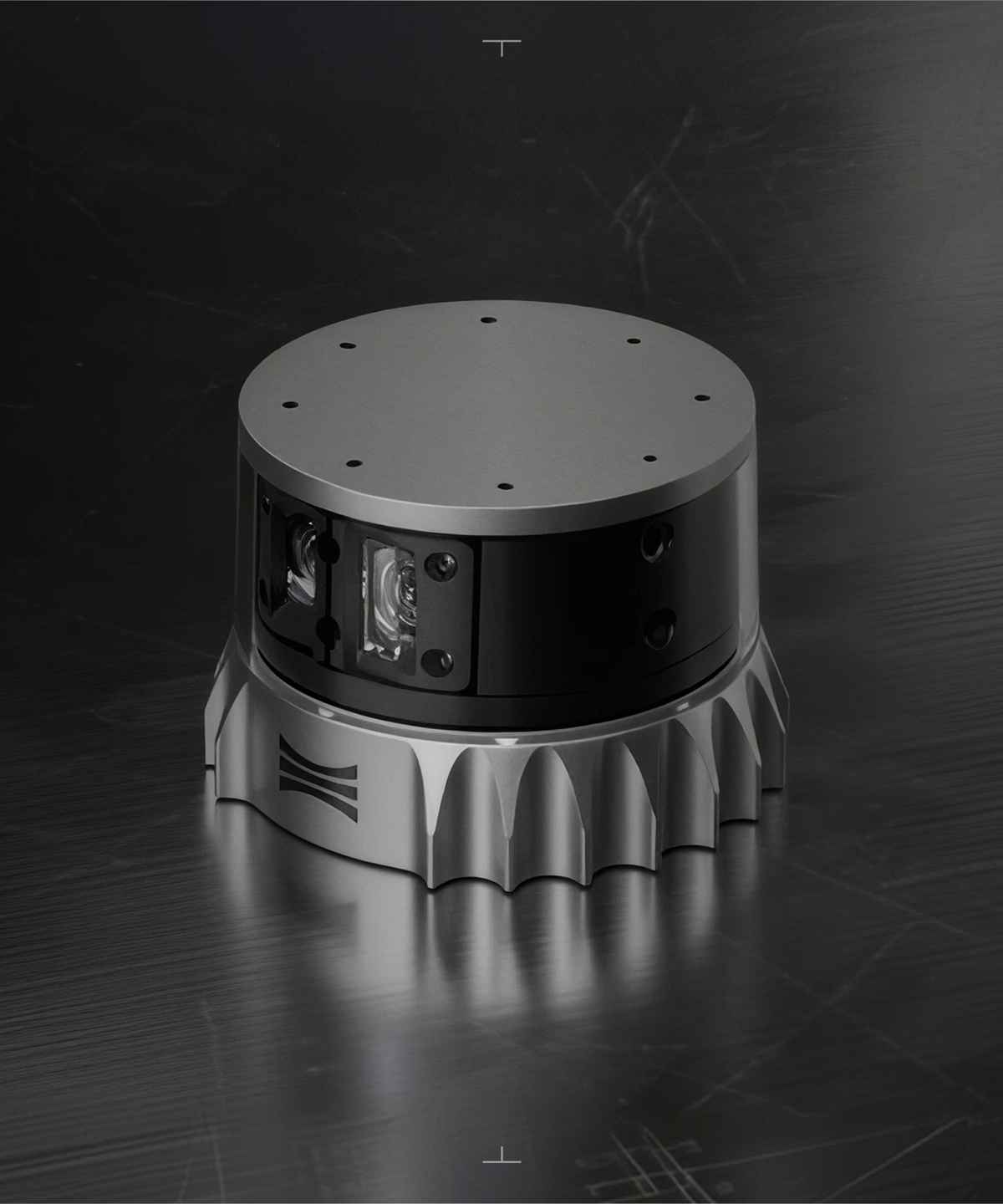
Rev8 OS0 specifications: 128 channels, 90° vertical FOV, 10.4M points/sec, IP68/IP69K sealing, 100g shock, 10 g-rms vibration
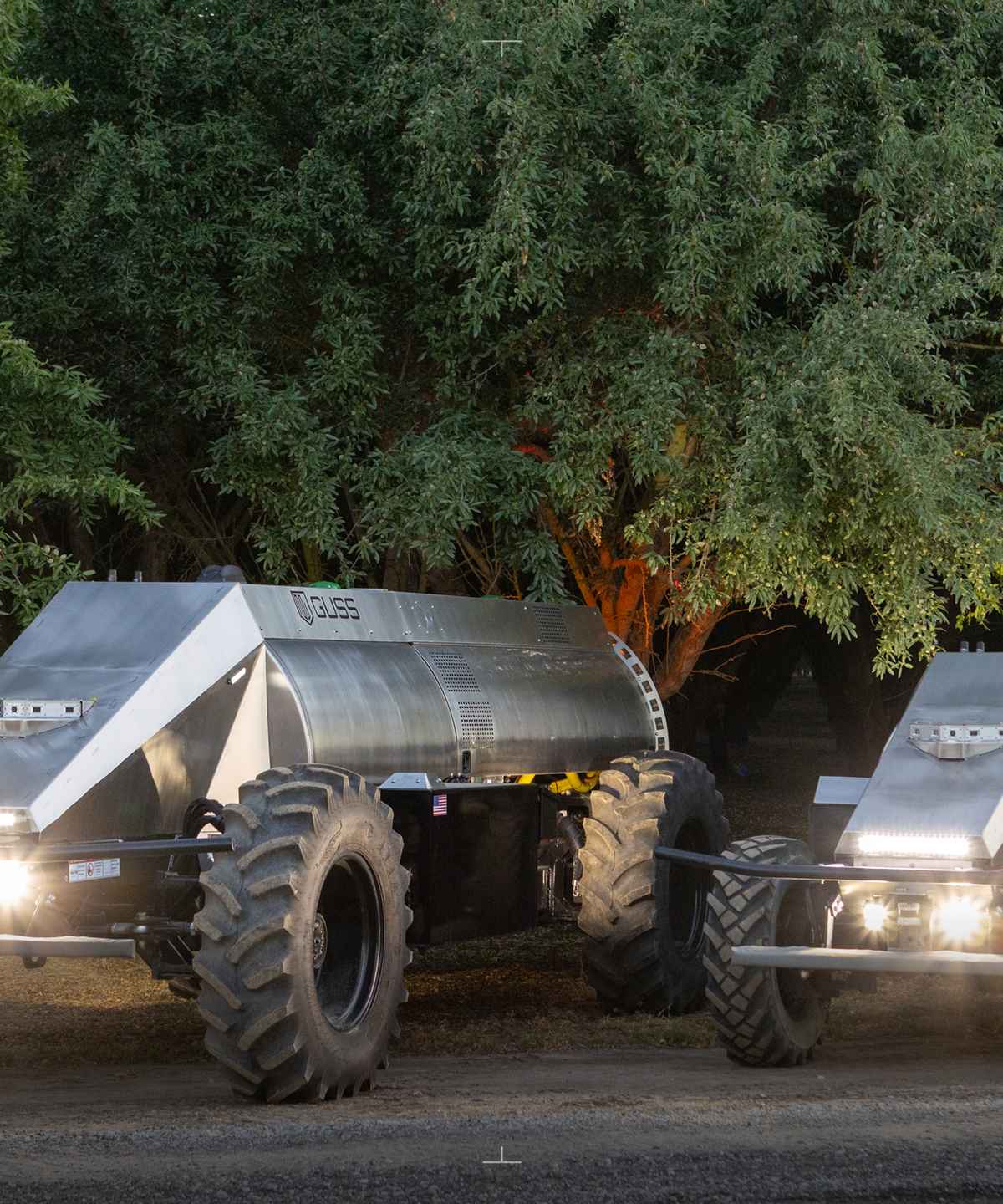
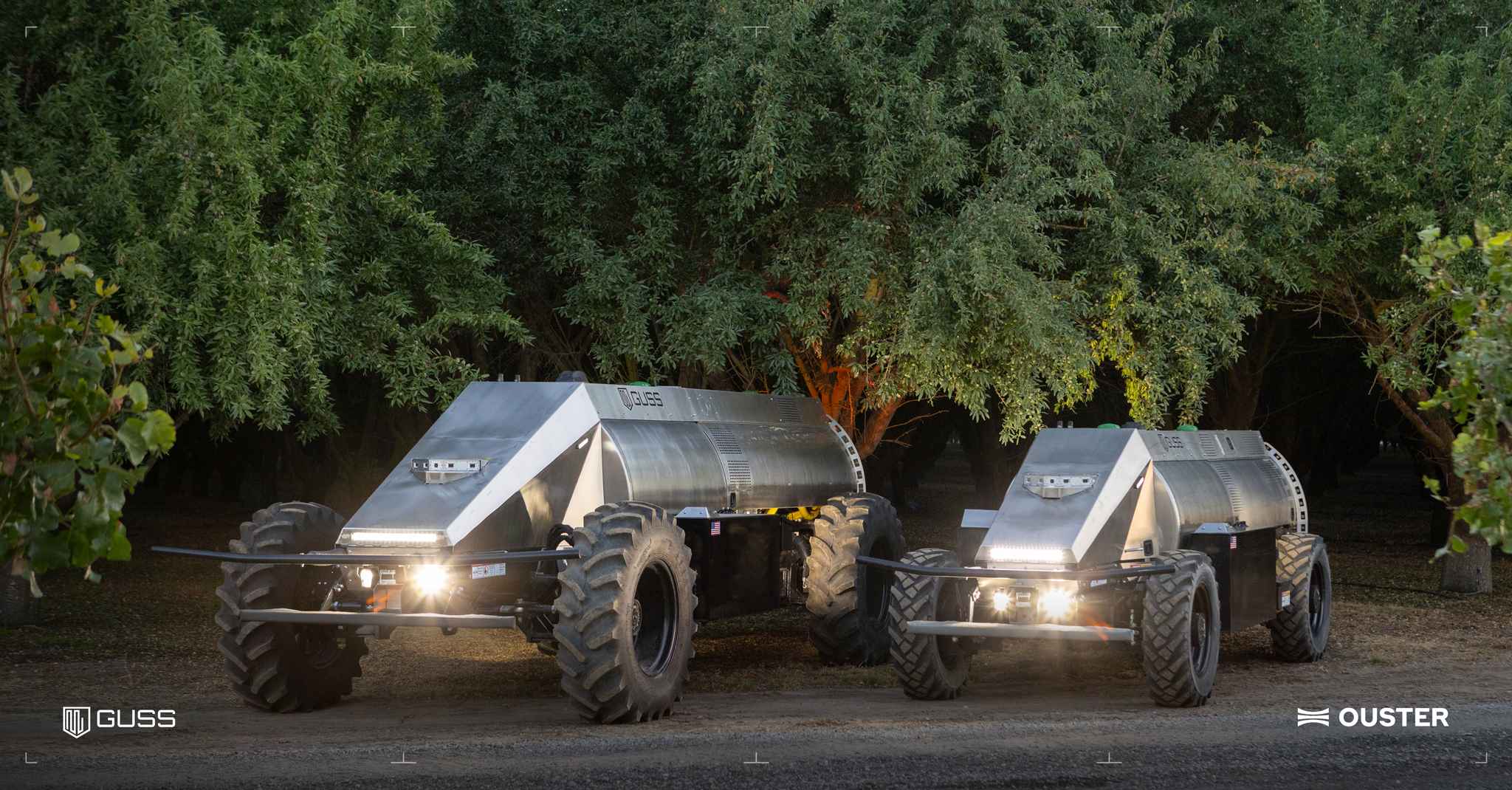
GUSS Autonomous Sprayers equipped with Ouster OS0 lidar, working an almond orchard