
Inha University: Winter Autonomy with Ouster Digital Lidar
Researchers at Inha University are improving lidar performance degradation in extreme weather with LIORNet (a self-supervised U-Net++ architecture) and Ouster digital lidar. They achieve a 96% snow removal rate while preserving critical urban structures in real-time.
For autonomous vehicles, falling snow has always been a major headache. As flakes drift through a lidar sensor’s field of view, they create thousands of spurious points. To a traditional perception system, these look like phantom obstacles, effectively blinding the vehicle and causing SLAM (Simultaneous Localization and Mapping) algorithms to fail.
To solve this, researchers from Inha University (in collaboration with the Ministry of National Defense, Korea and KAIST) developed a breakthrough deep-learning framework: LIORNet.
The Challenge: The Impossible Label
Training AI to recognize snow has historically hit a major bottleneck in annotation. You cannot ask a human to manually label 10,000 tiny, moving white dots in a high-speed 3D scan.
Furthermore, traditional filters often act like a blunt instrument. They are either too aggressive, deleting actual buildings and road signs along with the snow, or too weak, leaving enough noise to trigger emergency braking events.
The Solution: LIORNet and Self-Supervision
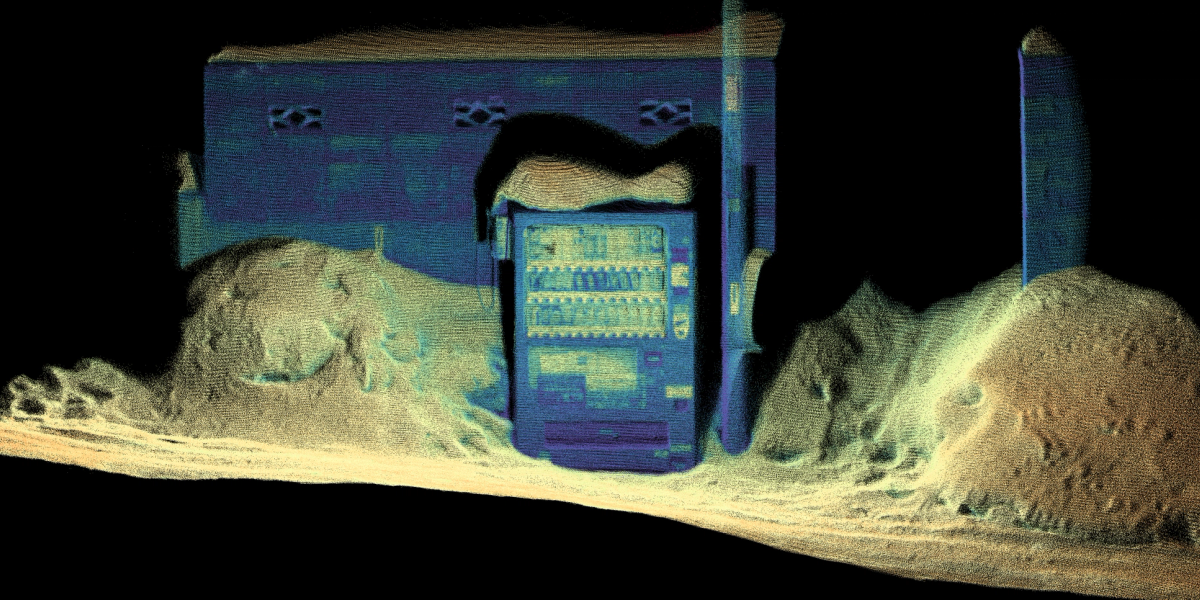
LIORNet (Low-Intensity Outlier Removal Network) is a self-supervised U-Net++ architecture that sets a new standard for winter perception. Instead of relying on human labels, the system teaches itself using physics-based pseudo-labels.
The framework unifies three critical paradigms into one model:
- Distance-based analysis: Exploiting the spatial sparsity of snowflakes compared to solid objects.
- Intensity-based filtering: Leveraging the unique, low-reflectivity signature of falling snow.
- Deep Learning: Using an encoder-decoder structure to learn complex noise distributions that simple rules miss.
Digital Lidar in Action
The choice of sensor is the secret sauce for LIORNet’s success. The framework relies heavily on high-resolution intensity and reflectivity data, layers where Ouster’s digital architecture excels.
Because Ouster sensors provide structured, high-quality data for every pixel, LIORNet can distinguish the subtle difference between a low-reflectivity snowflake and a critical environmental structure, such as a road curb or a lane marking.
The Results: Real-World Performance
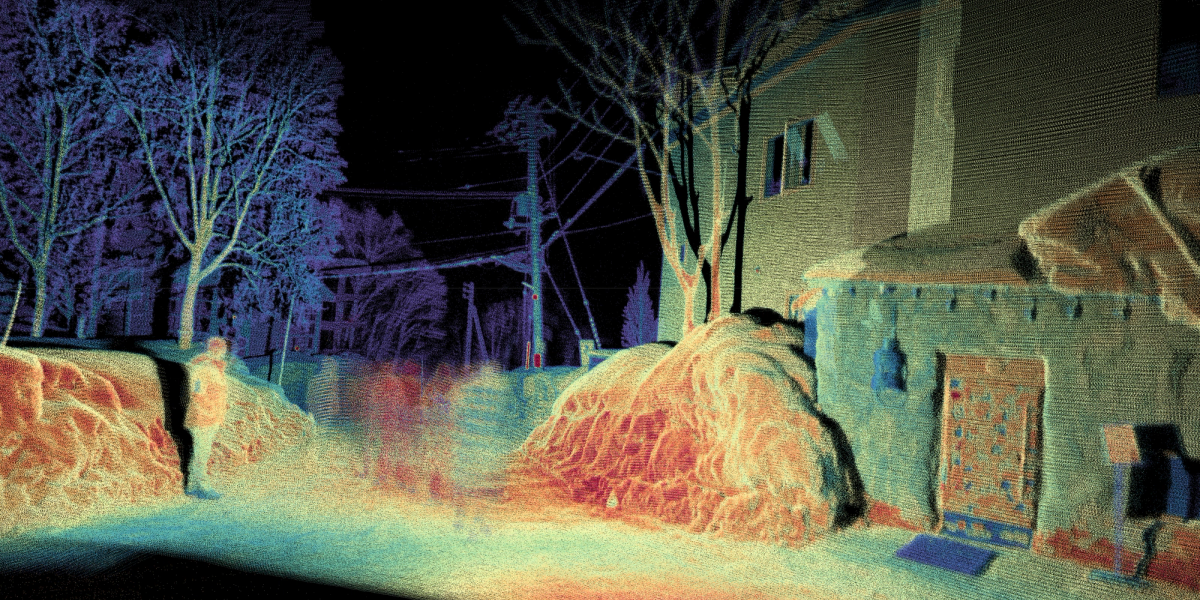
Testing across diverse snowfall conditions in South Korea, Sweden, and Denmark proved that LIORNet is ready for the road:
- 96% Snow Removal: Achieved an industry-leading recall rate in catching and muting flakes.
- Structural Integrity: Unlike standard filters, it preserved the crisp edges of road boundaries and vertical structures.
- Real-Time Speed: The system operates at 43.5 Hz—more than double the standard 20Hz output of high-performance lidar, ensuring zero lag in vehicle decision-making.
Moving Toward Level 5 Winter Driving
This research, supported by our partner General Laser, proves that the right combination of high-fidelity hardware and self-supervised software can overcome the long-tail problem of adverse weather.
By providing the high-resolution digital data necessary for models like LIORNet, Ouster and General Laser are helping the research community move autonomous systems closer to reliable performance in even the harshest environments.
Read their paper published to arXiv here.
Accelerate Your Research
We are proud to support the next generation of breakthroughs in autonomy and perception. University labs and research institutions can access exclusive, pre-approved pricing on our full suite of digital lidar sensors. Reach out to our team about your use case and we can work together to find an appropriate fit.